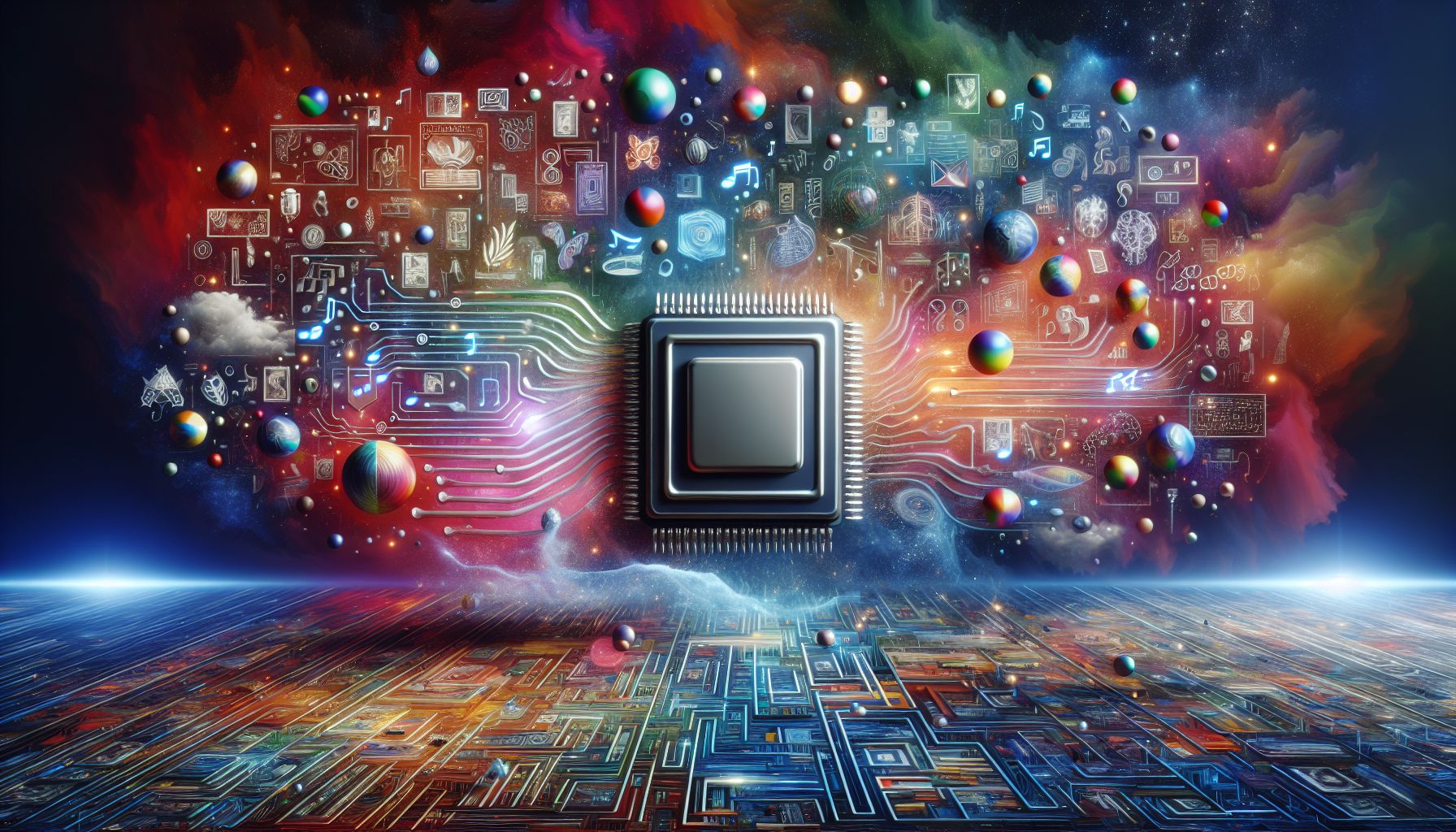
Hey, fellow tech enthusiasts! Isn’t it wild how every day brings some new tech development that makes your head spin? Today, I want to talk about something that’s been on my mind lately—something that’s changing the creative world in ways I never expected. Grab your sketchpad or musical instrument if you’ve got one because we’re talking about Artificial Intelligence in the Creative Arts. Yep, you heard it right. AI is getting mixed up with human creativity, and honestly, it’s as fascinating as it is weird.
The Dawn of Artistic Algorithms
So, where do we start with AI pushing its way into the creative world? Well, this has been building for decades, but let me focus on the recent stuff that actually matters. AI developments from OpenAI, Google’s DeepMind, and tons of open-source developers have started creating art, music, and even poetry that’s… well, sometimes it’s genuinely impressive.
Remember when that computer-generated painting sold for $432,500 at Christie’s back in 2018? That felt like a real “holy shit” moment. It proved AI could actually break into a market that we always thought belonged exclusively to human emotion and expression.
Creative Collaboration: Humans and Machines Together
Here’s what I find interesting: these algorithms aren’t going anywhere. But instead of taking over completely, AI is becoming more like the tools themselves. Rather than replacing traditional artists—because let’s face it, we can’t just download Picasso’s brain into a computer—AI is about working together.
Tools like DeepArt can turn your random selfies into something that looks Renaissance-level fancy. Meanwhile, Riffusion listens to your basic chord progressions and spits out surprisingly good musical ideas. It’s not just for skilled musicians either. Total beginners can now create stuff they could only dream about before. I actually love this part, considering my own attempts at learning guitar resulted in nothing but sore fingers and annoyed neighbors.
Raising the Bar (And The Question)
But here’s where things get complicated. AI in art doesn’t come without some serious questions. We’ve always understood creativity as this deeply human thing—inspiration hits, and somehow that gets translated into art. But AI works through pure logic and pattern analysis. Doesn’t that kind of clash with our whole idea of the creative muse?
People keep asking whether AI is actually ‘creative’ or just following really complex instructions to remix existing patterns. Honestly, I don’t think it captures those wild 3 AM brushstrokes or those burn-the-midnight-oil recording sessions that human artists know so well. But the assistance it provides? That has real commercial potential.
Then there are the ethical issues. When AI creates by analyzing existing patterns, we run into some messy questions about copyright, ownership, and fairness. Who owns an AI-generated piece? The programmer? The person who prompted it? The artists whose work the AI learned from? It gets complicated fast.
The Road Ahead: Future Prospects for AI in Creative Arts
Let me paint you a picture of where this might be heading. We could see interactive movies that change based on what the viewer wants to happen. Imagine paintings that shift and evolve in real-time, or music that adapts to your mood as you listen.
The possibilities are pretty mind-bending when you think about it. AI could help democratize creativity in ways we haven’t seen before. Someone with a great story idea but no writing experience could collaborate with AI to bring that story to life. A person with musical ideas but no technical training could create full compositions.
Epilogue
This has been quite a journey through AI’s role in the arts and all the wild possibilities ahead. AI is definitely weaving itself into our creative processes, and we’re entering this new era where technology and human creativity are getting tangled up in interesting ways.
I’m curious to see how this all plays out. Will we look back on this as the moment everything changed, or will it just become another tool in the artist’s toolkit?
Thanks for sticking with me through all this. I’d love to hear your thoughts on where you think AI and creativity are headed. Talk to you soon!
Recent Comments