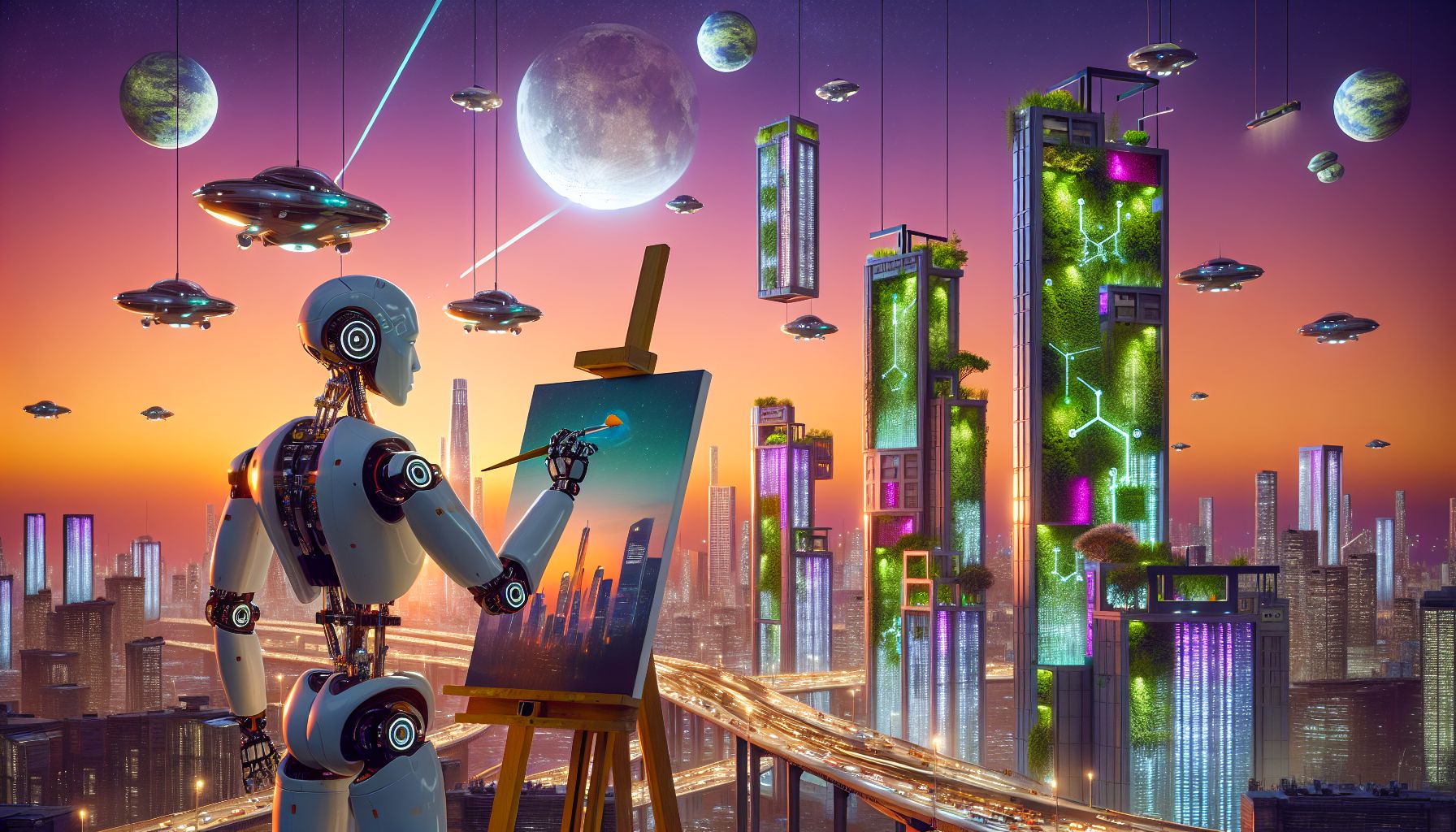
Artificial Intelligence in creative arts is turning heads, raising eyebrows, and causing the occasional double-take. It seems like every other month we’re hearing about a new AI-powered tool designed to liberate human imagination or, depending on whom you ask, steal the bread from artists’ mouths. It’s a fascinating clash between art and algorithm, and I gotta say—I’m here for it. Today, we’ll explore this brave new world of AI-generated art, looking at the creative corners where artificial intelligence could be the ultimate art partner, muse, or if we’re lucky, a canvas-ready apprentice.
AI Talent on the Rise: More than Just Brushes and Pixels
AI is no longer content being stuck in spreadsheets, statistical analysis, or mining stock data. It’s moved into the creative sphere, and honestly, it’s doing pretty well. Remember when AI wrote movie scripts? It was charming, sure, but it also showed real potential. These days, AI tackles more ambitious artistic projects. From music compositions and novels to paintings and digital art, AI seems to have caught the creativity bug.
The question “Can machines be arbiters of beauty?” is becoming one of our generation’s most interesting philosophical puzzles. AI like OpenAI’s DALL-E, Google’s DeepDream, and RUNWAY give us platforms that create artwork even seasoned professionals might struggle to distinguish from human-made pieces. These AI systems work like high-tech paintbrushes for anyone willing to experiment with them. Despite the pushback from traditionalists with each new wave, these creative algorithms keep pushing forward.
Machines Unleashing Imagination: AI as a Tool
Will AI replace artists completely? I doubt it. Humans still have that spark for original creativity that’s hard to replicate. And honestly, the most interesting work happens when AI generates the initial idea and humans shape it into something truly compelling. It’s collaboration, not competition.
The real magic happens when human experience meets algorithmic possibility. AI can process billions of images and generate unexpected combinations, but it takes human judgment to know what resonates, what tells a story, what moves people. That’s not changing anytime soon.
Creativity and the Tech Renaissance: Where Art Comes From
Critics worry that AI art lacks soul, that it’s just sophisticated copying without real understanding. There’s truth to that concern. But I think we’re looking at this wrong. AI isn’t trying to replace human creativity—it’s expanding the toolkit. Just like photography didn’t kill painting, AI won’t kill traditional art. It’ll just give us new ways to make things.
The artists who thrive will be the ones who learn to dance with these new tools, who use AI as a starting point rather than an endpoint. Because at the end of the day, art isn’t just about technical skill. It’s about having something to say and finding new ways to say it.
Related: The Future of Longevity: Why Living to 200 Could Be Just Around the Corner
Recent Comments