
Welcome back, fellow tech aficionados! I’ve got something exciting up my digital sleeves today. Let’s talk about how Artificial Intelligence is making waves in the creative arts—not just popping up on our screens but actually getting into the messy business of creativity itself. Move over, Bob Ross! There’s a new player in town, and it doesn’t need a beret or those frustrating paint tubes that never squeeze right.
The Rise of the Robo-Prodigy
AI in creative arts isn’t exactly breaking news anymore. We’ve watched it generate paintings that could fool Rembrandt experts and compose melodies that might make Beethoven do a double-take. What started as a curious experiment has turned into something much bigger. Remember that AI artwork that sold at Christie’s? $432,500! That’s serious money. And now we’ve got OpenAI creating music, including jazz variants perfect for those late-night coding sessions with terrible coffee.
Digital Brushstrokes, Real Art
Here’s what’s fascinating about AI art—it doesn’t come with the baggage human artists carry. No preconceived notions about what “should” look beautiful. It processes visual data faster than any human could and finds patterns we might miss entirely. AI can analyze thousands of masterpieces, break down brush techniques, and create something genuinely new from that knowledge.
Think about it this way: instead of spending hours trying to capture the perfect sunset over the Grand Canyon, you could describe your vision to an AI and watch it translate your words into something visual. The technology isn’t just copying existing art—it’s learning the rules so it can break them in interesting ways.
When Algorithms Write Symphonies
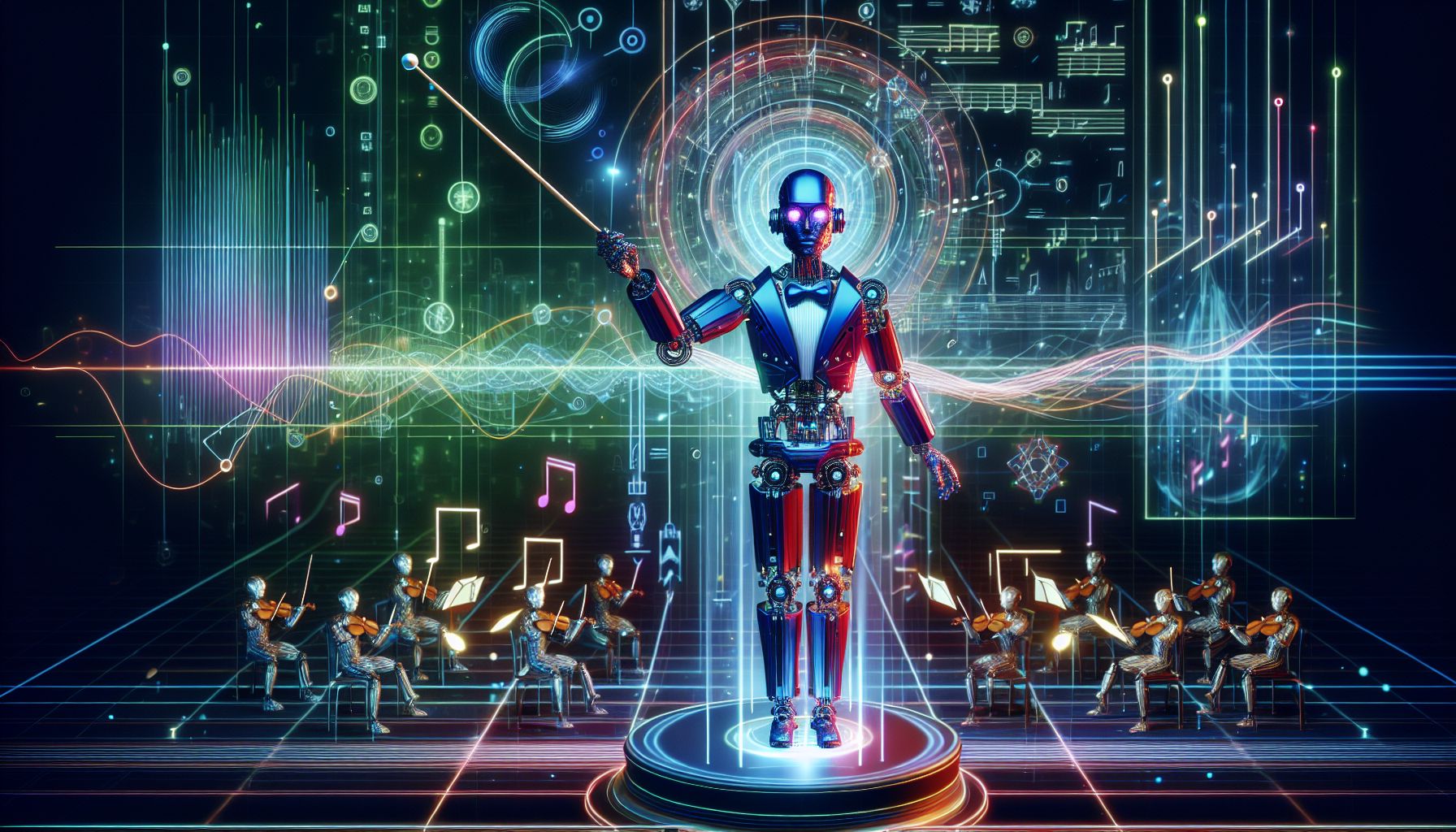
Music is where AI gets really weird and wonderful. Algorithms don’t get tired, they don’t have bad days, and they certainly don’t argue about tempo changes. They can process centuries of musical theory in seconds and spit out compositions that sound surprisingly human. I’ve heard AI-generated pieces that gave me chills, and others that sounded like a computer having a musical breakdown.
What’s interesting is how AI handles collaboration with human musicians. It’s not trying to replace the guitarist or the vocalist—it’s more like having a tireless writing partner who never runs out of ideas. Some composers are using AI to break through creative blocks, feeding their half-finished pieces into the system and seeing what comes back.
The results can be unpredictable. Sometimes you get beautiful, haunting melodies. Other times you get something that sounds like jazz played through a broken radio. But that unpredictability might be the point—it pushes human artists into territory they wouldn’t have explored on their own.
Why Should We Care About Robot Artists?
Fair question. Why does any of this matter when we have plenty of human artists creating amazing work?
1. It Makes Art More Accessible: Not everyone can afford art school or years of music lessons. AI tools are democratizing creativity in ways we’ve never seen before. A kid with a laptop and an internet connection can now create professional-quality art or music. That’s pretty incredible when you think about it. Sure, there’s still value in traditional training and human intuition, but AI is lowering the barriers for people who have ideas but lack technical skills.
2. It Changes How We Collaborate: The most exciting developments aren’t AI replacing human artists—they’re AI working alongside them. I’ve seen photographers use AI to enhance their images in ways that would have taken hours in Photoshop. Musicians are using AI to generate backing tracks or suggest chord progressions they wouldn’t have considered. It’s like having a creative assistant who never gets tired and always says yes to weird experiments.
The Messy Ethics of Machine Creativity
Of course, this raises some uncomfortable questions. If an AI creates a painting, who owns the copyright? What happens to human artists when AI can produce art faster and cheaper? And there’s the bigger philosophical question: can something without consciousness or emotion create truly meaningful art?
I don’t think we have clear answers yet. The technology is moving faster than our ability to figure out the implications. But I suspect the future isn’t humans versus machines—it’s humans and machines creating things neither could make alone.
Recent Comments