

How Politics Moved Online
Political organizing has completely changed over the past decade. Where campaigns used to rely on door-to-door canvassing and phone banks, today’s political movements start on smartphone screens and encrypted messaging apps. Nearly three-quarters of voters under 35 now get their political news primarily from social media platforms. This represents the biggest generational shift in how people consume information since television displaced radio.

This digital shift goes way beyond just reading news online. Grassroots political movements now organize through private messaging apps. WhatsApp and Telegram groups have become command centers for local political mobilization across continents. I’ve seen this pattern everywhere from Hong Kong’s pro-democracy protests to rural American school board campaigns. These platforms give organizers access to infrastructure that used to be available only to well-funded political operations.
The changes touch every part of democratic participation. Open-source tools for voter contact and canvassing are now standard equipment for modern campaigns. This has opened up sophisticated organizing technology to groups that could never afford it before. Digital fundraising platforms have also lowered traditional barriers to campaign finance. But this shift creates new dependencies on small-dollar donors who respond to increasingly urgent appeals. Sometimes I wonder if we’ve traded one set of problems for another.
When Algorithms Pick Sides
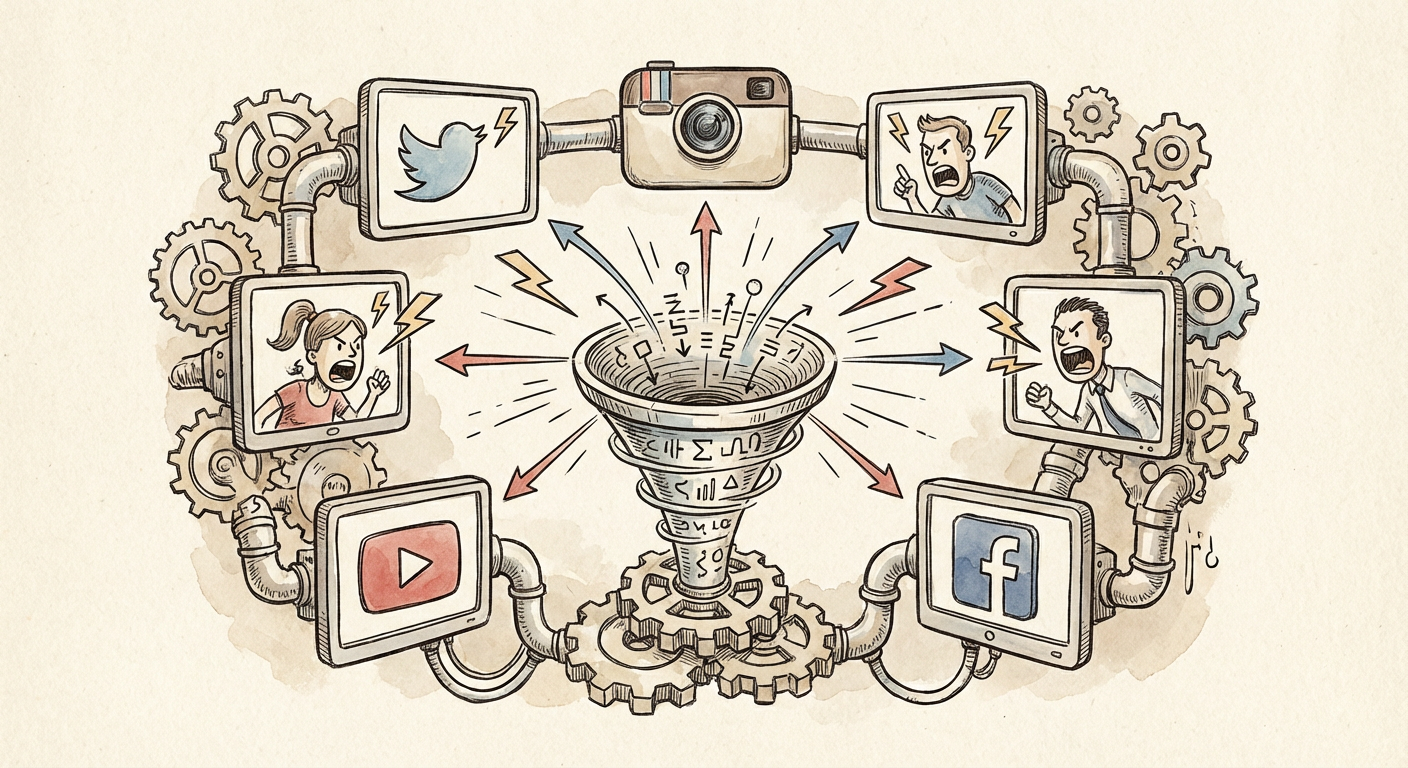
Here’s where things get messy. Major social media platforms systematically push content that generates outrage and emotional intensity. This has been documented across Facebook, Twitter, YouTube, and TikTok. The algorithmic preference for inflammatory material completely changes the political information environment. More measured voices get pushed to the margins while the most provocative content gets elevated.
The way this amplification works creates a feedback loop that rewards political actors for taking increasingly extreme positions. Content that generates anger, fear, or moral outrage gets wider distribution than nuanced policy discussions or calls for compromise. Research teams tracking engagement patterns have identified this bias toward emotional intensity as a consistent feature across platforms, regardless of political orientation.
These algorithmic decisions operate largely outside public oversight or democratic accountability. Platform companies make editorial decisions that shape political discourse for billions of users, yet these decisions remain hidden from researchers, regulators, and the public. The Brennan Center democracy research has documented how these automated systems can accidentally suppress legitimate political speech while amplifying misleading information.
Foreign Meddling Gets Digital
Digital platforms have become the primary way foreign actors try to mess with democratic elections worldwide. Intelligence agencies and independent researchers have found coordinated campaigns on X, Facebook, and TikTok ahead of virtually every major election cycle, from municipal races to presidential contests. These operations exploit the same viral mechanics that drive organic political engagement.
These interference efforts keep getting more sophisticated. Early operations relied on obvious fake accounts and crude propaganda. Current campaigns use authentic-looking personas, purchase legitimate advertising space, and copy the communication styles of domestic political movements. Some operations don’t even promote specific candidates. They just amplify divisive content to make people lose trust in democratic institutions.
Our detection and response systems can’t keep up with the pace of innovation in influence operations. Platforms typically identify and remove foreign networks only after they’ve already reached significant audiences. Meanwhile, the decentralized nature of modern information warfare makes comprehensive defense increasingly difficult. Bad actors adapt their tactics faster than we can build defenses.
Empowerment and Manipulation
Digital tools have genuinely made political participation more accessible in measurable ways. Candidates with limited resources can now access voter databases, mapping software, and communication tools that used to be exclusive to major political organizations. Small-scale political movements can coordinate across geographic boundaries and build coalitions that would have been impossible in earlier eras.
But here’s the catch: the same accessibility that empowers grassroots organizing also enables sophisticated manipulation campaigns. The tools that allow genuine political movements to flourish can be weaponized by state actors, wealthy interests, and extremist groups seeking to distort democratic discourse. This dual nature of digital political technology creates ongoing tensions between openness and security.
The shift toward small-dollar digital fundraising perfectly illustrates this complexity. Online donation platforms have enabled political movements to build financial independence from traditional power brokers and wealthy donors. Yet this model also creates pressure for increasingly urgent and emotionally charged fundraising appeals. Campaigns have to compete for attention in crowded digital spaces. The result can be a political culture dominated by crisis messaging and zero-sum thinking.
Building Better Digital Democracy
Addressing the challenges of digital democracy requires moving beyond simple narratives of technology as either liberating or dangerous. The evidence suggests that digital tools amplify existing political dynamics rather than fundamentally changing them. Platforms that reward outrage and manipulation in digital spaces often reflect deeper problems in political culture and institutional design.
Real reform will likely require a combination of technical solutions, regulatory frameworks, and cultural changes in how citizens engage with political information online. Some proposals focus on algorithmic transparency, requiring platforms to disclose how content gets prioritized and distributed. Others emphasize digital literacy education to help citizens navigate increasingly complex information environments.
The stakes of these debates go far beyond partisan political competition. As Democracy Now and other outlets have documented, the integrity of democratic institutions depends on citizens’ ability to access reliable information and engage in good-faith political dialogue. Digital platforms now provide the primary infrastructure for both functions, making their governance a central challenge for democratic societies.
Understanding these dynamics requires ongoing attention to evidence rather than ideology. As digital political organizing continues to evolve, citizens, researchers, and policymakers must track both the opportunities and risks that emerge from technological change in democratic participation.
Recent Comments