

The Headline Numbers Don’t Tell the Real Story
When the Department of Government Efficiency announced it had identified over a trillion dollars in potential federal savings by mid-2025, the headlines were impossible to miss. Elon Musk and his team had been given a mandate to cut waste, and they were delivering on it, at least in terms of sheer ambition. But here’s what I’ve learned covering budget politics for years: the gap between identified savings and actual verified savings is where the real story lives. The Congressional Budget Office took a hard look at DOGE’s claims and scored the verified savings at a fraction of that trillion-dollar figure. That gap matters. It tells us something important about the difference between administrative boldness and fiscal reality.
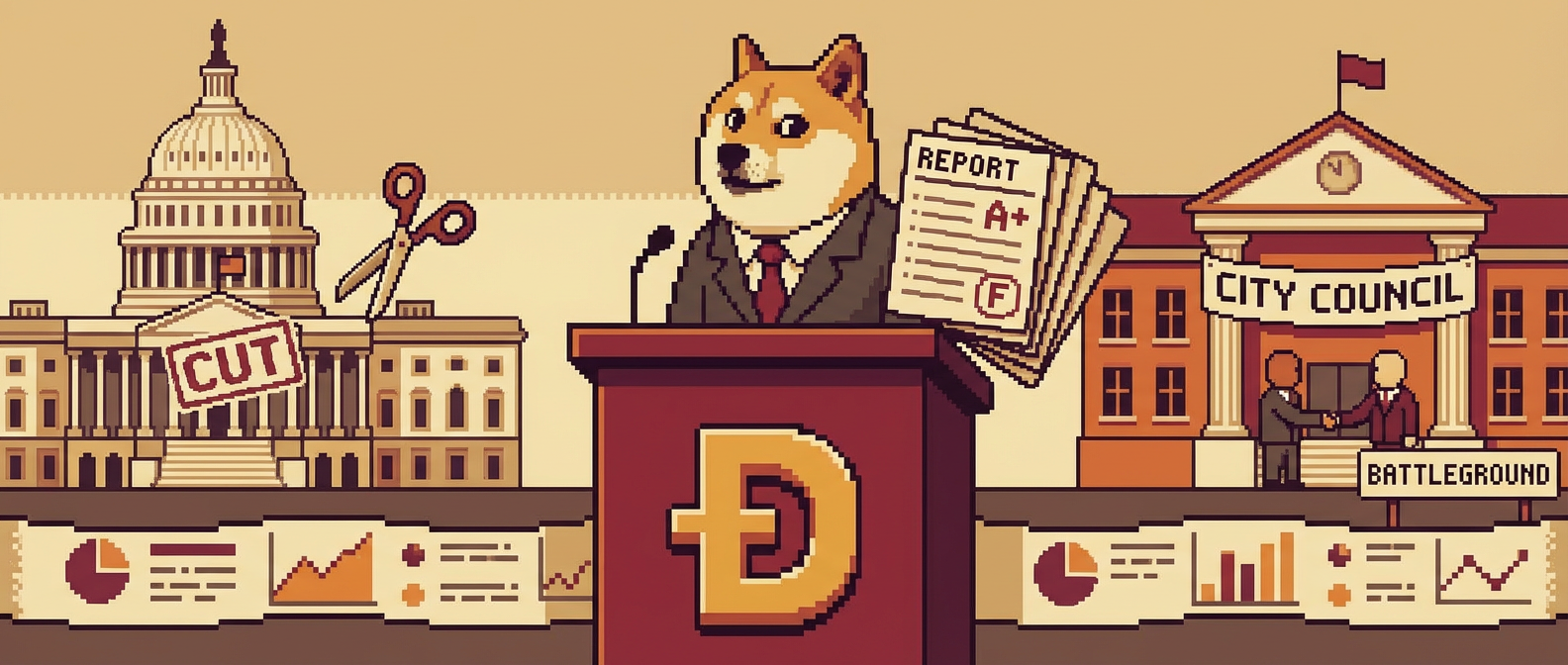
What happened next was more consequential than most people realized. When you suddenly eliminate 75,000 federal positions through the deferred resignation offers that circulated in early 2025, according to Office of Personnel Management data, you’re not just reducing a payroll line item. You’re disrupting the actual machinery of government. The people who administer grants, who review applications, who maintain databases, who answer phones at federal agencies, those jobs disappeared. And when the machinery slows down or stops, the impact radiates outward faster than anyone anticipated.

Follow the Money: Where Federal Funding Actually Disappeared
This is where I need you to pay close attention, because this is where your city budget meets federal policy in the most direct way possible. The National Association of Counties documented that federal grant eliminations tied to DOGE reviews forced at least 23 states to restructure their local social service delivery programs. That’s not an abstract policy shift. That’s your county deciding whether it can afford to keep mental health services operating at current levels. That’s your city figuring out how to staff a domestic violence shelter when the federal funding that paid half the budget suddenly evaporates. Check out the National Association of Counties: Federal Funding Impact Tracker to see which programs were affected and when.
By late 2025, budget officers in major cities were sounding genuine alarm. Denver reported mid-cycle funding gaps of around 180 million dollars. Columbus and Memphis flagged shortfalls in the 40 to 180 million dollar range. These aren’t cities crying wolf. These are professional administrators who manage budgets for millions of people, saying publicly that they couldn’t plan their way through what happened. When a city loses federal funding mid-year, it has three choices: cut services immediately, tap reserves and weaken their financial position, or raise local taxes. None of those are good options. All three have real consequences for real people.
What the Public Actually Noticed (And Didn’t)
Here’s something fascinating that a Pew Research Center survey captured in October 2025. Fifty-four percent of Americans said they believed DOGE had “some” or “significant” impact on government waste. That’s a meaningful majority who think the effort was real. But only 31 percent said federal services in their community had improved. Let that sink in. Even people who believed DOGE was cutting waste didn’t see improvements. Many saw degradation. They saw longer waits at Social Security offices. They saw delayed approvals for disability benefits. They saw federal loan processing grind slower. They noticed the friction even if they couldn’t always trace it back to workforce reductions and funding disruptions.
The gap between belief in federal waste and experience with federal service quality tells us something important about how ordinary people evaluate government. We don’t live in the abstract. We live in the concrete. We go to the DMV or call about our benefits or wait for a permit. That’s where government lives for most of us. When you reduce the people processing those transactions without reducing the demand for those services, something has to give. Service quality usually gives first.
Why This Is Actually About Your City Council
This is the part where I want to redirect your attention, and I mean this with real urgency. The federal government is important. Congress matters. The presidency matters. But the city and county officials closest to you are now the ones actually managing the consequences of federal policy. They’re the ones deciding whether to keep a library branch open or consolidate branches. They’re the ones deciding whether to hire social workers or eliminate positions. They’re the ones deciding whether to increase the local tax base to make up for federal shortfalls. These decisions are being made right now in budget sessions and town halls, and most people aren’t paying attention.
To understand the actual impact of federal efficiency efforts on your daily life, you need to know who sits on your city council or county commission, and you need to know how they voted on these budget adjustments. You need to know whether they advocated for your community when federal funding disappeared. Attend a budget hearing. Look at the actual line items. Ask questions about why certain services contracted. This isn’t civics class idealism. This is where your agency actually lives. This is where you can ask someone to account for their choices face to face.
What Happened, and What Comes Next
Let me be clear about what the evidence shows. DOGE identified significant potential savings, though the verified savings fell short of initial claims. Seventy-five thousand federal jobs were eliminated. Multiple federal grant programs were discontinued or restructured. The Congressional Budget Office Federal Workforce Analysis 2025 documents the workforce reduction in detail. Federal service quality degraded in measurable ways. Local governments scrambled to fill gaps with local resources they often didn’t have. Some communities managed better than others. Some found creative solutions. Some had already been cutting local services and had no cushion left.
What comes next depends partly on federal policy, but more on what local officials decide to prioritize. Do they fight to restore federal funding relationships? Do they raise local revenues to fill gaps? Do they restructure services more efficiently? Do they accept reduced service levels as the new baseline? These questions are yours to influence. Show up to a city council meeting. Ask about the federal funding your community lost. Ask what decisions were made to adjust. Ask who advocated for your neighborhood. Ask what you could do to help. Democracy isn’t a spectator sport at this level. It’s actually designed for your participation.
Recent Comments