
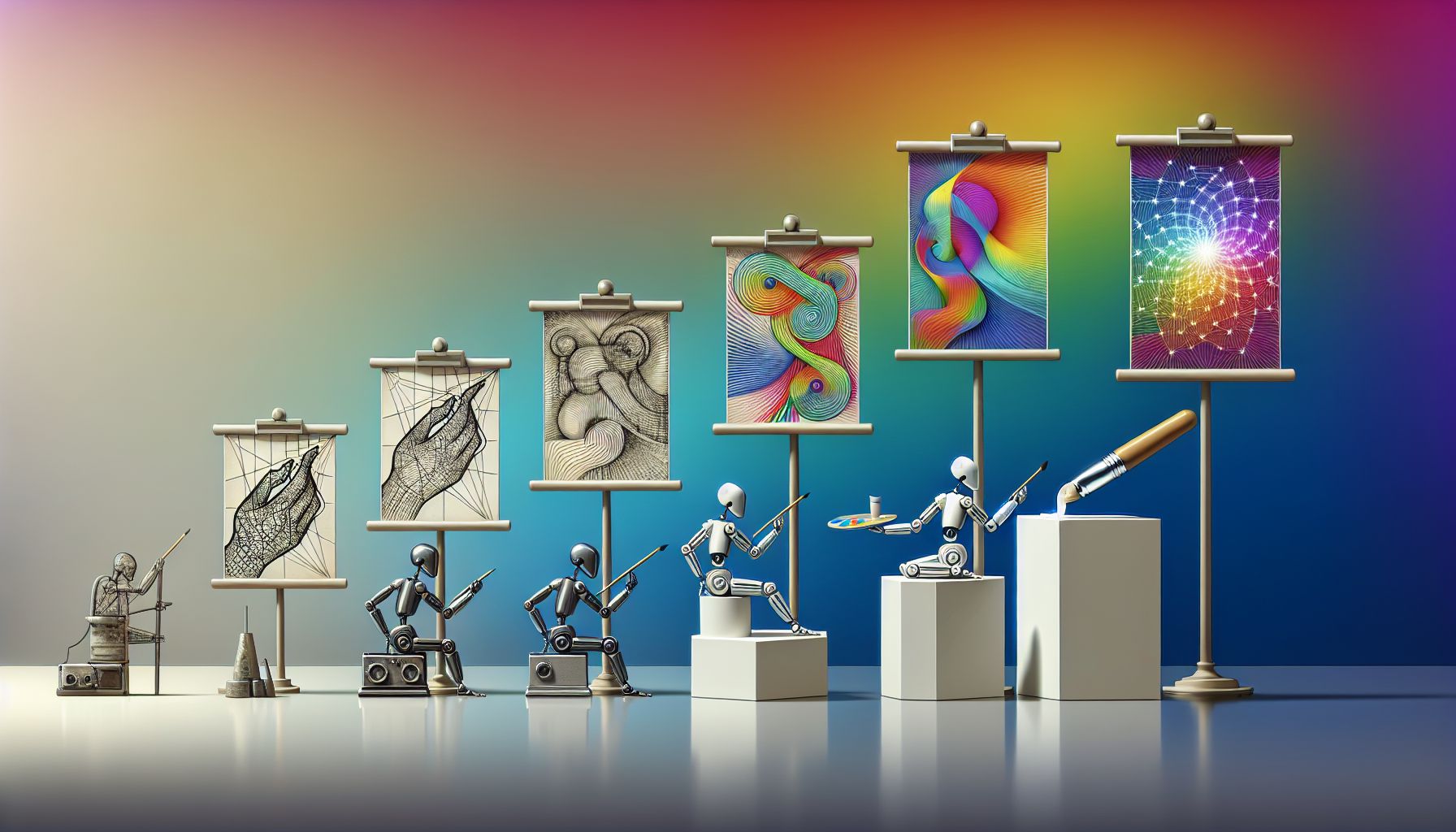
Hey tech enthusiasts! So today we’re diving headfirst into a topic that doesn’t just tap on innovation but dances with it. Yep, you guessed it—I’m talking about Artificial Intelligence (AI) in the creative arts. Technophobes, fear not. This isn’t Skynet we’re dealing with; instead, we’re witnessing a collaboration where inventiveness meets machine learning. Blend Leonardo da Vinci with the algorithmic might of a 21st-century supercomputer, and you’re starting to see what’s happening here, folks.
When Computers Learn to Paint
I remember chuckling to myself when I first heard that computers could paint. Picturing robots with paintbrushes taped awkwardly to their arms gave me a good laugh. But these AI artists are nothing like what I imagined.
Take DALL-E from OpenAI. These folks have built something pretty remarkable: a system that creates original (and sometimes downright weird) visuals from text descriptions. It’s like having creativity on demand, minus the berets and caffeine addictions that come with human artists.
Sure, it’s not perfect. AI often decides to ignore reality completely, creating dreamscapes that are, let’s say, highly interpretive. This will either spark your imagination or leave you scratching your head in confusion.
The Big Question: Is This Real Creativity?
Here’s where things get interesting: Can AI actually create? Or is it just crunching data and spitting out combinations? This debate has been going on for years now. Look at The Next Rembrandt Project, where algorithms analyzed Rembrandt’s brushstrokes to create a “new” Rembrandt painting. It’s technically impressive, but who really “made” this piece? The AI team or some digital ghost of Rembrandt himself?
The attribution question cuts deep philosophically. Picture a future where AI fills museums with perfect imitations. We could see this as the ultimate collaboration between human and machine. Or we could freak out about art losing its humanity. I’m honestly torn between fascination and unease.
Beyond Canvas: AI Gets Physical
AI isn’t just making digital art, though. Take Pindar van Arman’s painting robots. These machines actually hold brushes and make physical paintings, complete with intentional “flaws” and unexpected creative choices. Sometimes the results are brilliant. Sometimes they’re beautifully messy. Kind of like human artists, actually.
What gets me excited is how AI is pushing into sculpture, music, and performance art. We’re seeing algorithms compose symphonies, generate poetry, and even choreograph dance. Each field brings its own challenges and surprises.
The Human Element Still Matters
Here’s what I find most interesting: the best AI art projects still need human creativity to guide them. Someone has to ask the right questions, feed the right prompts, and make the final creative decisions. AI becomes a powerful tool, like a really sophisticated paintbrush.
Artists are learning to collaborate with these systems in ways we never expected. Some use AI to break through creative blocks. Others let the machine surprise them, then build on those surprises. It’s less about replacement and more about augmentation.
The future of AI in creative arts? Honestly, I think we’re just getting started. The technology will keep improving, but the real magic happens when creative humans figure out new ways to use these tools. That’s where the next chapter gets written.
Recent Comments