

Updated on March 9, 2026
A Breakthrough Leap: AI in the World of Creative Arts
Hey, fellow tech enthusiasts! Isn’t it wild how every day brings some new tech development that makes your head spin? Today, I want to talk about something that’s been on my mind lately—something that’s changing the creative world in ways I never expected. Grab your sketchpad or musical instrument if you’ve got one because we’re talking about Artificial Intelligence in the Creative Arts. Yep, you heard it right. AI is getting mixed up with human creativity, and honestly, it’s as fascinating as it is weird.
The Dawn of Artistic Algorithms
So, where do we start with AI pushing its way into the creative world? Well, this has been building for decades, but let me focus on the recent stuff that actually matters. AI developments from OpenAI, Google’s DeepMind, and tons of open-source developers have started creating art, music, and even poetry that’s… well, sometimes it’s genuinely impressive.
Remember when that computer-generated painting sold for $432,500 at Christie’s back in 2018? That felt like a real “holy shit” moment. It proved AI could actually break into a market that we always thought belonged exclusively to human emotion and expression.
Creative Collaboration: Humans and Machines Together
Here’s what I find interesting: these algorithms aren’t going anywhere. But instead of taking over completely, AI is becoming more like the tools themselves. Rather than replacing traditional artists—because let’s face it, we can’t just download Picasso’s brain into a computer—AI is about working together.
Tools like DeepArt can turn your random selfies into something that looks Renaissance-level fancy. Meanwhile, Riffusion listens to your basic chord progressions and spits out surprisingly good musical ideas. It’s not just for skilled musicians either. Total beginners can now create stuff they could only dream about before. I actually love this part, considering my own attempts at learning guitar resulted in nothing but sore fingers and annoyed neighbors.
Raising the Bar (And The Question)
But here’s where things get complicated. AI in art doesn’t come without some serious questions. We’ve always understood creativity as this deeply human thing—inspiration hits, and somehow that gets translated into art. But AI works through pure logic and pattern analysis. Doesn’t that kind of clash with our whole idea of the creative muse?
People keep asking whether AI is actually ‘creative’ or just following really complex instructions to remix existing patterns. Honestly, I don’t think it captures those wild 3 AM brushstrokes or those burn-the-midnight-oil recording sessions that human artists know so well. But the assistance it provides? That has real commercial potential.
Then there are the ethical issues. When AI creates by analyzing existing patterns, we run into some messy questions about copyright, ownership, and fairness. Who owns an AI-generated piece? The programmer? The person who prompted it? The artists whose work the AI learned from? It gets complicated fast.
The Road Ahead: Future Prospects for AI in Creative Arts
Let me paint you a picture of where this might be heading. We could see interactive movies that change based on what the viewer wants to happen. Imagine paintings that shift and evolve in real-time, or music that adapts to your mood as you listen.
The possibilities are pretty mind-bending when you think about it. AI could help democratize creativity in ways we haven’t seen before. Someone with a great story idea but no writing experience could collaborate with AI to bring that story to life. A person with musical ideas but no technical training could create full compositions.
Epilogue
This has been quite a journey through AI’s role in the arts and all the wild possibilities ahead. AI is definitely weaving itself into our creative processes, and we’re entering this new era where technology and human creativity are getting tangled up in interesting ways.
I’m curious to see how this all plays out. Will we look back on this as the moment everything changed, or will it just become another tool in the artist’s toolkit?
Thanks for sticking with me through all this. I’d love to hear your thoughts on where you think AI and creativity are headed. Talk to you soon!

Updated on March 9, 2026
No Artist Required: AI in the Creative Arts is a Match Made in Silicon Heaven
Folks, today I want to explore an artistic renaissance powered by Artificial Intelligence. Seriously, there’s something incredibly poetic and utterly delightful about letting machines take a stab at human creativity. It either shows them as misunderstood entities just searching for their creative outlet or hyper-efficient digital Picassos ready to mix brushstrokes and bytes. Don’t expect an AI Michelangelo chiseling sculptures quite yet, but given the rapid progress we’re seeing, who knows?
Technology Meets Heart in Art
We’ve had tech disruptors everywhere, but Artificial Intelligence in creative arts feels particularly exciting. Picture walls painted by machine hands, poems crafted through algorithmic word wizardry, music that feels like it shares your heartbeat but was built on complex neural networks lighting up dance floors worldwide.
This isn’t science fiction anymore! Let’s explore how AI dances around traditional creative domains, leaving everyone in impressive awe and sometimes delightful confusion.
New Tools for Visual Artists
Visual art used to be where anything too sci-fi would get skeptical laughs. But here’s what’s happening: Adobe’s Photoshop now has smart creative features through Adobe Sensei, and Google’s AI art styles exploded with DeepDream. Remember seeing that elephant with subtle Van Gogh swirls? That’s DeepDream’s neural networks at work.
I think of it as a Digital Renaissance. The fusion feels genuinely exciting. Young artists can create without traditional technical barriers. The tools won’t do the creative thinking, but they handle the heavy lifting in ways that free up artists for pure imagination.
The possibilities really are impressive. Custom digital landscapes, novel artistic styles, instant visual experimentation. It’s like having a tireless creative assistant that never runs out of ideas to try.
AI Finds Its Rhythm in Music
Music might be where AI shows its most interesting personality quirks. AI can analyze thousands of songs and generate new compositions that sound surprisingly human. Sometimes eerily so.
The results range from genuinely catchy electronic tracks to weird experimental pieces that make you wonder what the algorithm was thinking. It’s not replacing human musicians, but it’s giving them new toys to play with.
What I find fascinating is how AI music often captures technical patterns perfectly but still sounds slightly off in ways that are hard to pinpoint. Like it understands the rules but not quite the soul behind them.
Writing Gets an AI Coauthor
Then there’s writing, where AI has become both incredibly helpful and slightly unsettling. These systems can generate stories, poems, and articles that often pass for human work on first glance.
The technology is impressive, but it also raises questions about creativity and authenticity that we’re still figuring out. When does AI assistance become AI authorship? It’s complicated territory.
What This All Means
AI in creative arts isn’t about replacing human artists. It’s about giving them powerful new tools and, honestly, some serious competition that might push everyone to be more innovative.
The technology is still evolving rapidly. What seemed impossible five years ago is now available in free apps. Where this leads, nobody knows for sure, but it’s definitely changing how we think about creativity itself.
Updated on March 9, 2026
This Just Got Serious: AI Is Making Art and It’s Kind of Awesome
Okay, real talk time: when most of us think “Artificial Intelligence,” we might envision futuristic robots, deep space missions, or dystopian overlords. Who’d guess AI would decide to take a creative vacation and dive into the world of art and creativity? That’s right, folks—AI has picked up a brush and is doing some serious Van Gogh vibes here, and it’s not just painting by numbers. Let’s explore how AI’s artistic endeavors might bring us a new renaissance.
Paint or Pixel? How AI Learned to “Art”
I remember the first time I fired up Microsoft Paint as a kid, believing in my artistic prowess until reality harshly reminded me otherwise. Fast forward to today’s tech scene, and it’s all too easy to feel like our software is beating us at our own game.
Modern AI doesn’t just mimic our artistic preferences. It analyzes them, processes massive amounts of data, and creates original pieces that—get this—you might actually want to hang in your living room. One of the most talked-about projects comes from OpenAI, the brain behind millions of AI-generated artworks that have the art community buzzing. It’s called DALL-E. These AI-powered models can generate detailed and unique images from simple text descriptions. It’s like feeding a poem into an algorithm and getting a painting in return!
The Birth of AI-Generated Creativity
Let’s break it down. At its core, these AI systems run on deep learning methods called GANs—Generative Adversarial Networks. Picture this: you’ve got two neural networks facing off, challenging and improving one another with guidance from tech researchers. The “generator” creates new images, while the “discriminator” evaluates them for authenticity. It’s like a buddy-cop sitcom meets Picasso, with each iteration getting better.
Another approach, StyleGAN, made waves in both the art world and the NFT market. This architecture lets you remix iconic artistic styles with user-defined preferences, blending them in ways that feel both familiar and completely new. Who would’ve imagined algorithmic da Vinci collaborations happening in your spare time?
Sometimes it feels like humans are losing the creative game to machines. There’s something both uncomfortable and incredible about watching algorithms produce art that genuinely moves you.
The Art Scene, AI Style
The AI art world is exploding right now. We’re seeing everything from abstract digital paintings that could hang in galleries to photorealistic portraits of people who don’t exist. Some AI can mimic classical painting techniques so well that art historians do double-takes. Others create completely alien aesthetics that no human artist has ever attempted.
What gets me is how unpredictable it all is. You can feed the same prompt to an AI system twice and get completely different results. There’s this element of surprise that keeps even the creators guessing about what they’ll get.
The results range from hauntingly beautiful to utterly bizarre. Some pieces feel like fever dreams translated into pixels. Others have this eerie perfection that makes you forget they weren’t painted by human hands. And then there are the completely abstract works that seem to tap into something beyond human artistic intuition.
Every year, AI art gets more sophisticated. We’re seeing digital galleries pop up, auction houses taking AI pieces seriously, and traditional artists either embracing the technology or worrying about their future. The whole landscape is shifting faster than anyone expected.

Updated on March 9, 2026
The Quantum Computing Revolution: Are We Ready to Enter a New Dimension?
Hey tech enthusiasts, it’s your friendly neighborhood tech nerd here, jumping straight into the wild world that’s about to unleash trillions of Qubits of awesomeness onto our world. That’s right, today we’re tackling the puzzle wrapped in subatomic weirdness: Quantum Computing. I find it both exciting and completely mind-bending—kind of like trying to explain Fortnite to your grandma.
Now, let’s not think quantum computers are some magic solution to all our tech problems. They’re more like your chill guide through lightning-fast speeds, cutting through the fog of modern binary technology in ways we’re still figuring out.
We’ll explore the ups and downs with excitement, curiosity, and just a bit of healthy skepticism—like standing at the edge of hearing that first note in a symphony. So, let’s jump into why everyone’s chatting over coffee about these computing giants and their quantum magic!
What the Heck Is Quantum Computing?
Alright, let’s crack open this mystery box in a way that makes sense to actual humans—no small task in tech world. At its weird core, quantum computing goes way beyond what regular computers can handle. This technology uses something called superpositions with qubits, and these aren’t your typical computer bits.
Classical bits—our familiar ones and zeros—work in straightforward on-or-off states. But quantum bits can be both at once, thanks to quantum entanglement. Algorithms can dance through millions of possibilities simultaneously, breaking free from the limitations of traditional programming!
The Wild Ride of Quantum Entanglement
Picture reality like a bowl of spaghetti where every noodle somehow knows what the other noodles are doing instantly, no matter how far apart they are. Einstein famously called this spooky behavior “spooky action at a distance,” and honestly, he wasn’t wrong about the spooky part.
When quantum particles get entangled, measuring one instantly affects its partner, even if they’re on opposite sides of the universe. It sounds like science fiction, but it’s real physics. Regular computers process information step by step, but quantum computers can explore multiple solutions at once through these strange quantum connections.
The math behind it makes my head spin sometimes, but the basic idea is that quantum computers can solve certain problems exponentially faster than anything we have today. We’re talking about cracking encryption, simulating molecular behavior, or optimizing complex systems in ways that would take classical computers centuries.
Industry Impact: Where This Gets Interesting
Tech giants like Google, IBM, and Amazon are pouring billions into quantum research, and for good reason. We’re looking at potential breakthroughs in drug discovery, financial modeling, artificial intelligence, and cybersecurity. Google claimed “quantum supremacy” in 2019 with a calculation that would take classical computers thousands of years.
But here’s where it gets tricky. Banks are worried about quantum computers breaking current encryption methods. Pharmaceutical companies are excited about modeling molecular interactions. Climate researchers see opportunities for better weather prediction. The applications seem endless, but we’re still in the early experimental phase.
The Reality Check: Challenges Ahead
Let me be honest—quantum computing isn’t ready for your laptop anytime soon. These machines need to operate at temperatures colder than outer space. They’re incredibly fragile and prone to errors from the tiniest environmental changes. A stray photon or vibration can mess up calculations.
The programming is also completely different from anything most developers know. We’re essentially learning a new language of computation. Plus, quantum computers won’t replace classical computers—they’ll work alongside them for specific types of problems.
Then there are the costs. We’re talking millions of dollars for machines that fill entire rooms and require teams of specialists to operate. The infrastructure needed is massive, and the skilled workforce is tiny.
Despite these hurdles, progress is happening fast. What seemed impossible five years ago is now being demonstrated in labs worldwide. The question isn’t if quantum computing will transform technology—it’s when and how quickly we can overcome the current limitations.
So there you have it—quantum computing in all its weird, wonderful, and challenging glory. We’re standing at the edge of a computing revolution that could change everything from how we discover medicines to how we protect our data. It’s equal parts thrilling and terrifying, and I can’t wait to see where this quantum journey takes us.
Updated on March 9, 2026
Greetings, Tech Enthusiasts!
Welcome back to another dive into emerging technologies. Today, I want to talk about something that’s been on my mind lately: Artificial Intelligence in Creative Arts. Yeah, I know what you’re thinking. We’re talking about algorithms that paint, write poetry, and compose music you might actually want to listen to.
When Machines Pick Up Paintbrushes
Look, I get it if you’re skeptical about machines making real art. For centuries, we’ve thought of art as something uniquely human. But here’s the thing: AI is already creating stuff that’s hard to ignore. Take projects like AICAN or DeepArt. These platforms take massive databases of classic artworks and run them through neural networks to create new pieces. And honestly? Some of the results are pretty impressive. Van Gogh might be rolling in his grave, but the artwork speaks for itself.
We’re in uncharted territory here. I mean, what’s next? AI-designed murals popping up in Montmartre? A robot version of Banksy? The potential for AI to generate endless unique creations without repeating itself is something that gets both tech enthusiasts and artists talking.
Digital Shakespeares and Silicon Songwriters
Remember when Watson dominated Jeopardy? Now imagine AI writing sonnets with that same computational power. Songwriting with AI isn’t some mad scientist experiment anymore. It’s becoming a genuine fusion of traditional artistry and new technology. I’d bet my dusty college textbooks that AI-generated music will end up in playlists right next to Bach, The Beatles, and Beyoncé.
Take Sony’s Flow Machines, which created jazz pieces that blend classical elements with modern sounds. Or OpenAI’s MuseNet, which can compose in different styles and with various instruments. These aren’t just random noise generators. They’re creating music that has structure, emotion, and yes, sometimes even soul.
The Human Factor
But here’s where it gets complicated. The conversation around AI art isn’t just about technical capability. It’s about what art means, what creativity is, and whether machines can truly understand human emotion well enough to reflect it back to us. Some artists see AI as a threat to their livelihood. Others view it as just another tool, like Photoshop or a synthesizer.
What I find interesting is how AI is forcing us to question our assumptions about creativity. Is art about the final product or the process? Does it matter if a beautiful painting was created by a human hand or an algorithm? These aren’t easy questions, and honestly, I’m not sure we have clear answers yet.
Real-World Impact
AI art isn’t just a curiosity anymore. Galleries are displaying AI-generated works. Musicians are collaborating with algorithms. Graphic designers are using AI to speed up their workflow. The technology is moving from experimental to practical pretty quickly.
But there are real concerns too. Copyright issues, job displacement, and questions about originality are all part of this conversation. When an AI creates something based on training data from thousands of human artists, who owns that work? It’s messy, and the legal system is still catching up.
What’s Coming Next
As we move forward, I think we’ll see AI become more integrated into creative workflows rather than replacing human artists entirely. The most interesting projects I’ve seen lately involve human-AI collaboration, where artists use AI as a creative partner rather than a replacement.
The technology is getting better at understanding context, emotion, and style. We’re moving beyond random generation toward more intentional, directed creativity. That’s both exciting and a little unsettling, depending on how you look at it.
The reality is that AI in creative arts is here to stay. Whether you see it as a tool, a threat, or something in between, it’s already changing how we think about creativity. And honestly? I think that conversation is just as valuable as any artwork that comes out of it.
The Bottom Line
Look, there’s no putting this technology back in the box. AI is going to keep getting better at creative tasks. The question isn’t whether it will happen, but how we adapt to it. Some of the most interesting art I’ve seen recently has come from artists who embrace the uncertainty and use AI to push boundaries they couldn’t reach on their own.
Until next time, keep an eye on this space. The intersection of technology and creativity is moving fast, and it’s going to be interesting to see where it takes us.
Catch you in the next post, where we’ll dive into another corner of our increasingly digital world.
Updated on March 9, 2026
The AI Revolution: How Generative AI is Reshaping Human Creativity
Hey tech fans! Have you heard the buzz about generative AI? If not, where have you been? Under a rock? Sure, blockchain and biotech are cool, but today I’m geeking out about how generative AI is kicking it up a notch in creative arts. Grab a cozy spot, because we’re diving into an artistic renaissance powered by algorithms and neural networks with more flair than I have trying to watercolor Bob Ross-style landscapes.
Generative AI 101: The Next Master Artists
So what exactly is generative AI? Simply put, it’s artificial intelligence that creates new content. We’re talking art, music, text—you name it—often based on inputs or historical data. Programs like OpenAI’s GPT and DALL-E, or Google’s DeepDream, have started to push our creative boundaries. But don’t worry, they’re more like nerdy jazz producers than Skynet incarnate.
In the gossipy halls of tech-town, generative AI is like that kid in high school who suddenly gets way cooler and more popular: little ol’ AI, who once just beat us at chess and Jeopardy, is now mastering digital paintbrushes and pencils.
Meet DALL-E and Friends
DALL-E, created by OpenAI, is the robo Rembrandt of our era, generating art as easily as you might doodle in your day planner. Type in “ducks reenacting Hamlet under the sea” and before you can fuel your coffee machine, there it is. Admirable, slightly surreal quirkiness becomes digital reality!
The question now is, can a DALL-E image genuinely inspire someone the way a Van Gogh might’ve? Or is it just another seven-second giggle session before you dive into your Reddit backlog? These are the questions purists sometimes sigh over (with sporadic eye-rolling included).
Why This Matters More Than You Think
Let’s unpack how this tech is nudging (sometimes elbowing!) us toward a creative revolution. Imagine someone mixing beans and toast with caviar—distinct genres, unexpected dish.
Democratization of Creativity
AI art democratizes creativity like Oprah gave away free cars. “Everyone gets an art side hustle!” Access that would’ve been unreachable a decade ago is now common. Even Bob, who barely passed Art 101, can blend diverse styles and create textures that would’ve taken years to master.
Emerging artists can now flex their muscles quickly, drafting Mozart-inspired symphonies or Renaissance-style TikTok scroll-stoppers without spending hundreds on formal training. It’s creativity without the traditional gatekeepers.
Never Hitting a Creative Wall Again
Who hasn’t smacked face-first into creative walls? Writer’s block, artist’s block, musician’s block—we’ve all been there. I’ve personally hit creative walls so hard I considered taking up accounting. But AI can throw you a lifeline when inspiration runs dry. Need a starting point? AI’s got your back with endless variations and fresh perspectives.
Artistic Hurdles: The Messy Reality
But let’s be real—this tech paradise isn’t without its problems. Like any revolutionary change, generative AI brings challenges that make some artists want to throw their digital tablets out the window.
The Authorship Battle
Here’s where things get sticky. Who owns AI-generated art? The person who wrote the prompt? The company that built the AI? The thousands of artists whose work trained the algorithm? It’s like trying to figure out who deserves credit for a group project where half the team was invisible.
And then there’s the authenticity question that keeps me up at night. Will AI-generated treasures carry the same emotional weight as human-crafted art? Can a machine truly capture the messy, beautiful chaos of human creativity? These aren’t just philosophical puzzles—they’re real concerns affecting how we value art.
Quality Control Issues
Okay, straight talk: I’ve seen AI compositions that made me scratch my head so hard I nearly gave myself a bald spot. Sometimes the results are breathtakingly beautiful. Other times they look like a fever dream had a fight with a printer. The inconsistency can be maddening, especially when you’re on a deadline and the AI decides to get creative in all the wrong ways.
What’s Next for Human Creativity?
So where does this leave us? I think we’re heading toward a future where AI becomes less of a replacement and more of a creative partner. Think of it like having a really smart, slightly unpredictable collaborator who never needs coffee breaks but sometimes suggests adding tentacles to everything.
The artists who thrive will probably be those who learn to dance with the technology rather than fight it. They’ll use AI as a starting point, a source of inspiration, or a way to explore ideas they’d never considered. The human touch—our ability to feel, interpret, and add meaning—remains irreplaceable.
But honestly? I’m still figuring this out alongside everyone else. Some days I’m excited about the possibilities. Other days I worry we’re moving too fast without thinking about the consequences. What I do know is that creativity has always evolved with technology, from the invention of oil paints to digital photography. This is just the latest chapter.
Final Thoughts
Generative AI isn’t going away, and frankly, I’m curious to see where it takes us. Will it democratize creativity or flood the market with mediocrity? Will it inspire new forms of art or diminish the value of human expression? Probably a bit of both.
What excites me most is watching artists figure out how to make this technology truly their own. Because at the end of the day, creativity isn’t just about the tools—it’s about the stories we tell and the emotions we share. And that’s something uniquely, beautifully human.
Updated on March 9, 2026
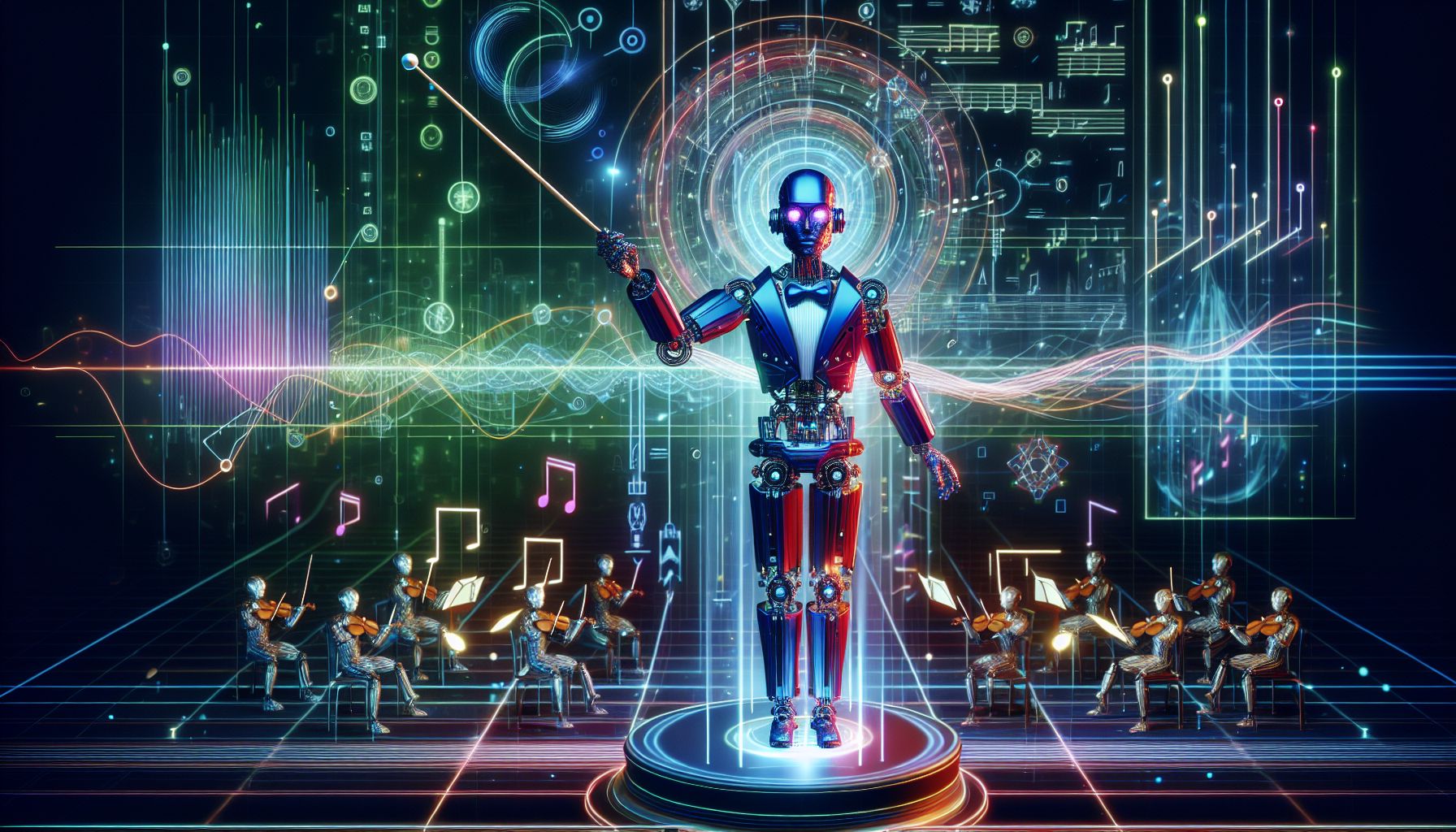
Artificial Intelligence: The Creative Conductor of Tomorrow
Welcome back, fellow tech aficionados! I’ve got something exciting up my digital sleeves today. Let’s talk about how Artificial Intelligence is making waves in the creative arts—not just popping up on our screens but actually getting into the messy business of creativity itself. Move over, Bob Ross! There’s a new player in town, and it doesn’t need a beret or those frustrating paint tubes that never squeeze right.
The Rise of the Robo-Prodigy
AI in creative arts isn’t exactly breaking news anymore. We’ve watched it generate paintings that could fool Rembrandt experts and compose melodies that might make Beethoven do a double-take. What started as a curious experiment has turned into something much bigger. Remember that AI artwork that sold at Christie’s? $432,500! That’s serious money. And now we’ve got OpenAI creating music, including jazz variants perfect for those late-night coding sessions with terrible coffee.
Digital Brushstrokes, Real Art
Here’s what’s fascinating about AI art—it doesn’t come with the baggage human artists carry. No preconceived notions about what “should” look beautiful. It processes visual data faster than any human could and finds patterns we might miss entirely. AI can analyze thousands of masterpieces, break down brush techniques, and create something genuinely new from that knowledge.
Think about it this way: instead of spending hours trying to capture the perfect sunset over the Grand Canyon, you could describe your vision to an AI and watch it translate your words into something visual. The technology isn’t just copying existing art—it’s learning the rules so it can break them in interesting ways.
When Algorithms Write Symphonies
Music is where AI gets really weird and wonderful. Algorithms don’t get tired, they don’t have bad days, and they certainly don’t argue about tempo changes. They can process centuries of musical theory in seconds and spit out compositions that sound surprisingly human. I’ve heard AI-generated pieces that gave me chills, and others that sounded like a computer having a musical breakdown.
What’s interesting is how AI handles collaboration with human musicians. It’s not trying to replace the guitarist or the vocalist—it’s more like having a tireless writing partner who never runs out of ideas. Some composers are using AI to break through creative blocks, feeding their half-finished pieces into the system and seeing what comes back.
The results can be unpredictable. Sometimes you get beautiful, haunting melodies. Other times you get something that sounds like jazz played through a broken radio. But that unpredictability might be the point—it pushes human artists into territory they wouldn’t have explored on their own.
Why Should We Care About Robot Artists?
Fair question. Why does any of this matter when we have plenty of human artists creating amazing work?
1. It Makes Art More Accessible: Not everyone can afford art school or years of music lessons. AI tools are democratizing creativity in ways we’ve never seen before. A kid with a laptop and an internet connection can now create professional-quality art or music. That’s pretty incredible when you think about it. Sure, there’s still value in traditional training and human intuition, but AI is lowering the barriers for people who have ideas but lack technical skills.
2. It Changes How We Collaborate: The most exciting developments aren’t AI replacing human artists—they’re AI working alongside them. I’ve seen photographers use AI to enhance their images in ways that would have taken hours in Photoshop. Musicians are using AI to generate backing tracks or suggest chord progressions they wouldn’t have considered. It’s like having a creative assistant who never gets tired and always says yes to weird experiments.
The Messy Ethics of Machine Creativity
Of course, this raises some uncomfortable questions. If an AI creates a painting, who owns the copyright? What happens to human artists when AI can produce art faster and cheaper? And there’s the bigger philosophical question: can something without consciousness or emotion create truly meaningful art?
I don’t think we have clear answers yet. The technology is moving faster than our ability to figure out the implications. But I suspect the future isn’t humans versus machines—it’s humans and machines creating things neither could make alone.
Updated on March 9, 2026
Dreaming Tomorrow: The 21st Century Wayfinder – Advanced Robotics
Hey tech fans! Grab your mug of coffee (make it double-shot!) and take a comfy seat on your beanbag chair — if you’re like me, you want comfy vibes while wading through tech ideas swirling down the Swift Current of Tomorrow.
Today’s hi-tech detour will funnel us down the busy, buzzing alley of Advanced Robotics. From self-driven swarms of delivery bots speed-dodging sidewalks to state-of-the-art eerily lifelike humanoids, robots have clomped their way Power Loader-style straight into our imagination. So strap in as we peel back layers and tinker around to get to know these metal heartbeats a tad bit better.
The Rise of Sherlock Bot: Problem-Solving Efficiency
Meet Sherlock Bot, my ideal self-steaming accomplice who may sport a deerstalker. What makes real-world robots impressive is mainly their ability to handle bizarre logic puzzles in the maze of day-to-day monotony. We’ve effectively armed them with brains that cut through complexity before tackling the erratic networks of everyday tasks.
Picture this: hospital logistics humming steadily as an endless carousel rotates bed linens. Seriously folks, robots like TUG—essentially a motorized hospital butler from AIM Robotics—aren’t all Daleks out for world domination. They’re streamlining human tasks, navigating through feasibility tests for efficiency.
Does imagining a calm procession of robots guiding others leave some of us feeling a bit unnecessary? Here’s the thing: these machines limit human exposure to mundane tasks during sudden crises. It’s not some sci-fi prediction but rather how some medical situations that used to seem like B-movie scenarios are becoming routine.
Artisans and Craftsmanship: The Creative Side of Robots
Let’s switch gears and look at robots that create beautiful things. Advanced robotics now combines precision with artistry, forming intricate patterns and designs that would challenge human craftspeople. These machines don’t just stamp out identical parts—they explore techniques that push the boundaries of what’s possible.
When companies like NVIDIA develop processing power for robotic modeling, we’re seeing minimal waste and maximum creativity. These systems can unravel complex manufacturing tasks while maintaining quality that rivals traditional craftsmanship. The technology rests on algorithms that are incredibly nimble, processing thousands of variables simultaneously. You get machines that can craft materials with the precision of a master artisan while pursuing efficiency that human hands simply can’t match. They’re creating art while serving practical purposes, rotating through quality checks and producing results that align with both aesthetic and functional goals.
DIY Robotics: The Maker Revolution
Let’s talk about something that gets me genuinely excited: the DIY robotics scene. Gone are the days when building robots required a PhD and a million-dollar lab. Today’s makers are stacking components in their garages, creating incredible machines with patience, creativity, and a solid toolbox.
The maker movement has transformed robotics from an exclusive academic pursuit into something accessible. You’ve got pioneers building everything from automated gardening systems to personal assistants using off-the-shelf parts. Arduino boards, 3D printers, and open-source software have democratized robot building. What used to require specialized knowledge now comes with tutorials, community forums, and starter kits. Sure, you’ll still face challenges—programming can be frustrating, and hardware failures happen—but the resources available today make it possible for anyone with curiosity and determination to build something amazing.

Updated on March 9, 2026
A Whirlwind Tour of Quantum Computing: Bracing for the Digital Revolution
Hey fellow tech aficionados! I’m stoked to bring you a tantalizing glimpse into the whirlwind world of quantum computing today. Trust me, it’s got all the trappings of a techno-thriller. Picture this: complex calculations done in milliseconds, equations usually reserved for weeks reduced to mere flickers of time. Sounds like something straight out of sci-fi’s crystal ball, right? Unfortunately, I don’t have a Holodeck to walk you through it, but grab a coffee, settle in, and let’s dive into this not-so-alternate universe of crazy computation boxes!
Cracking the Quantum Code: What is Quantum Computing?
Alright, I promise this won’t feel like lecture hall quantum physics. Here’s the lowdown for mortal minds! Quantum computing is a digital innovation that uses principles from quantum mechanics—like entanglement and superposition—to process information exponentially faster than traditional binary computers. It’s basically technology meets theoretical physics, and the results are pretty wild.
Picture qubits, the quantum equivalent of a classic computer bit. Unlike bits stuck with a strict 0 or 1 existence, qubits live in a state of quantum limbo, representing both at the same time due to superposition. It’s like they’re kicking aside the classic doors to usher in particles morphing through infinitely parallel universes of decision trees all at once. The quirky quantum system holds real promise to tackle optimization problems that make our silicon computers struggle.
Recent Breakthroughs and Mind-Blowing Headlines
Hold onto your keyboards—progress has been moving faster than an unsupervised toddler on espresso. Companies like Google and IBM are pushing boundaries, along with quantum startups mapping out roadmaps to the beyond. Looking back to autumn 2019: that’s when the “quantum supremacy” drums really started banging! Google claimed to solve in 200 seconds what traditional supercomputers would need thousands of years to crack. IBM quickly challenged the claim, but honestly, it got everyone curious like a movie trailer that reveals just enough to hook you.
Quantum annealing techniques are tackling complex problems hidden in the deepest parts of computing. One area getting a lot of attention is cryptography. The encryption we rely on today might not hold up against quantum computers, which is both exciting and a little terrifying. Meanwhile, these developments are shaking up traditionally solid paradigms across multiple industries.
Real-World Applications: Where Quantum Computing Gets Interesting
So where does this all lead? The applications are starting to get really interesting. Drug discovery could be revolutionized—imagine mapping molecular interactions at speeds we’ve never seen before. Financial modeling, weather prediction, artificial intelligence optimization. These are areas where quantum computing could make a genuine difference.
Healthcare is another frontier. Complex biological systems that take our current computers ages to model might become manageable. We’re talking about understanding protein folding, genetic analysis, and treatment optimization in ways that seemed impossible just a few years ago.
The logistics industry is watching closely too. Route optimization, supply chain management, resource allocation—problems that involve massive amounts of variables and calculations could see quantum solutions much sooner than we think.
Updated on March 9, 2026
The Joy of Robot Butlerry: Robotics Taking Over Mundane Chores
Hello tech dreamers, gather around the digital campfire because today, I’ve got something exciting to discuss. Now, I won’t pretend that handing over control to robots doesn’t sometimes wig me out. There’s still this nagging reminder in my brain of an endless parade of science fiction films where we’re usually left cleaning up aisles of destruction. But let’s dismiss the Hollywood scares for a second to explore a marvel from utopian imagination now venturing into our reality: robotic assistants.
The Age-Old Dream of Mecha-Help
Admit it, ever since appliances became “smart,” didn’t you wish your kitchen was a few more futuristic hops ahead? Perhaps autonomous culinary gadgets by day, disco dance partners by night? Okay, the last bit’s probably not on everyone’s wish list! 😄
The concept of helper robots hanging around our homes and offices like trusty metal companions has been around for ages. Oh, and let’s give credit to The Jetsons! They did stride onto our screens in the 60s, promising flying cars and Rosie—the emblematic housemaid whirring expectantly around, keeping the homestead running shipshape.
While cars are as terrestrial as they ever were, a lot less can be said about house chores in the not-so-distant future.
Science Fiction Made Fact: Recent Developments
Fast forward to today, and we’ve made some real progress in robotics. Take Boston Dynamics or companies working on home assistants. These aren’t just concepts on drawing boards anymore—they’re actual working machines you can buy and use.
I’ve watched these developments with a mix of fascination and mild anxiety. Part of me thinks it’s incredible that we’re finally getting the robot helpers we were promised. Another part wonders if I’m ready to trust a machine to handle my daily routine.
Here Come the Robots!
Looking at what’s actually available now, it’s pretty impressive:
-
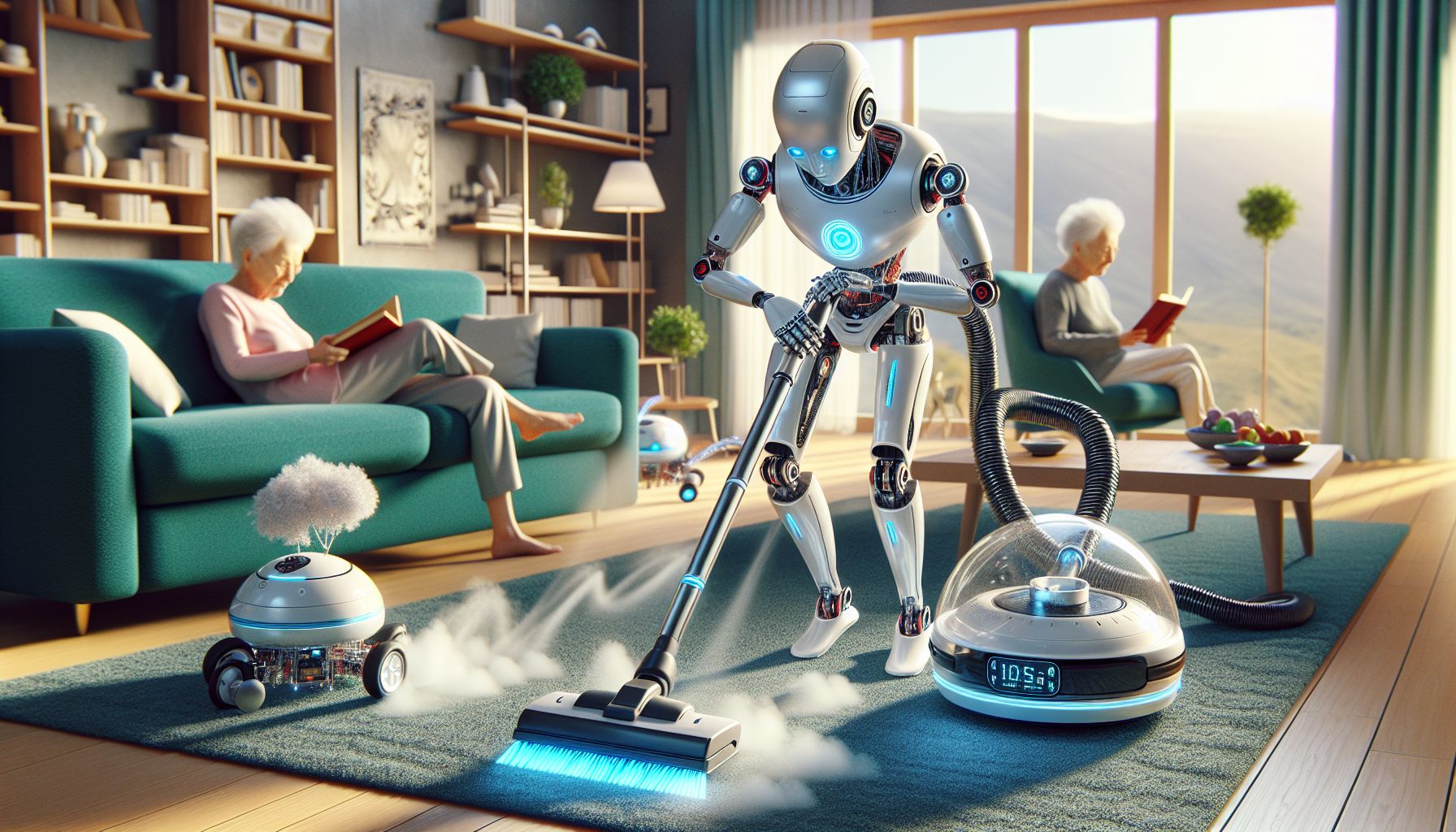
Robotic Vacuums – Thanks to self-learning vacuums like the Roomba, millions of people already have robots doing their cleaning. These things map your house, avoid obstacles, and return to charge themselves. It’s not quite Rosie from The Jetsons, but it’s a start.
-
Kitchen Helpers – Smart fridges can track your groceries and suggest recipes. Some can even order food when you’re running low. We’re not at the “robot chef” stage yet, but the foundations are there.
-
Personal Assistant Bots – Companies are developing robots that can handle basic household tasks, remind you of appointments, and even provide companionship for elderly users.
The Reality Check
Here’s the thing though—we’re still pretty early in this whole robot assistant journey. Most of these machines excel at one specific task rather than being the all-purpose helpers we imagined. Your robot vacuum is great at cleaning floors, but it can’t fold laundry or cook dinner.
And let’s be honest about the limitations. These robots work best in controlled environments. They struggle with unexpected situations, complex decision-making, or anything that requires genuine creativity or emotional intelligence.
There’s also the cost factor. Quality robotic assistants aren’t cheap, and many people are understandably hesitant to invest in technology that’s still developing rapidly. Nobody wants to buy the robot equivalent of a first-generation smartphone.
Closing Thoughts: From Sci-Fi Dream to Robo-Reality
So where does this leave us? I think we’re at an interesting crossroads. The technology is advancing faster than I expected, but we’re not quite at the seamless integration point yet.
What excites me most is seeing how these early adopters are using their robot helpers. Some people swear by their robotic vacuums and can’t imagine life without them. Others find the technology more trouble than it’s worth.
I suspect the real breakthrough will come when these robots become truly conversational and can handle multiple types of tasks. When I can tell my robot assistant to “clean up the living room and start dinner,” and it actually knows what that means—that’s when things get interesting.