

Updated on March 9, 2026
Unpacking the Evolution: AI in the Creative Arts
Hey tech enthusiasts! So today we’re diving headfirst into a topic that doesn’t just tap on innovation but dances with it. Yep, you guessed it—I’m talking about Artificial Intelligence (AI) in the creative arts. Technophobes, fear not. This isn’t Skynet we’re dealing with; instead, we’re witnessing a collaboration where inventiveness meets machine learning. Blend Leonardo da Vinci with the algorithmic might of a 21st-century supercomputer, and you’re starting to see what’s happening here, folks.
When Computers Learn to Paint
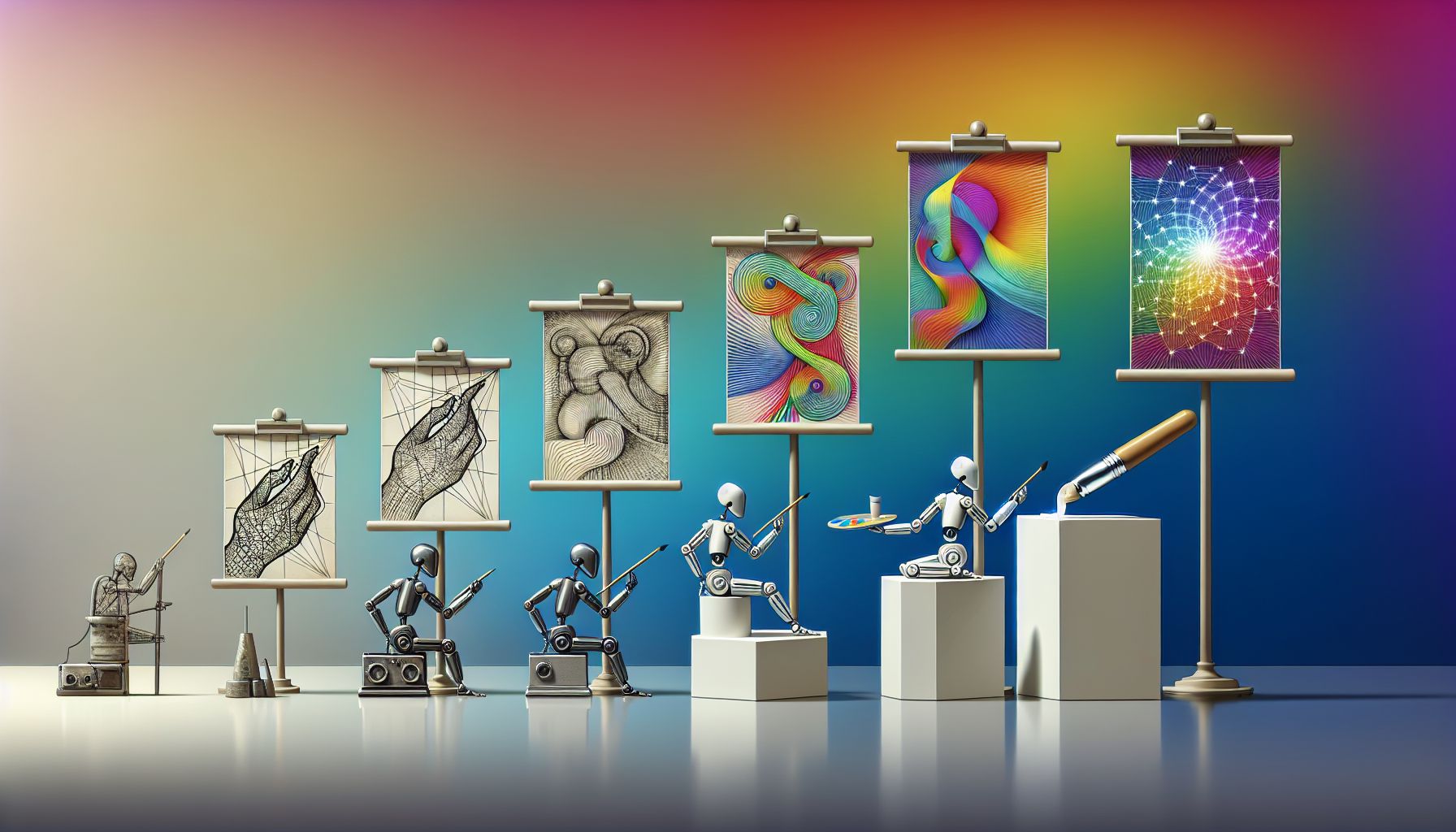
I remember chuckling to myself when I first heard that computers could paint. Picturing robots with paintbrushes taped awkwardly to their arms gave me a good laugh. But these AI artists are nothing like what I imagined.
Take DALL-E from OpenAI. These folks have built something pretty remarkable: a system that creates original (and sometimes downright weird) visuals from text descriptions. It’s like having creativity on demand, minus the berets and caffeine addictions that come with human artists.
Sure, it’s not perfect. AI often decides to ignore reality completely, creating dreamscapes that are, let’s say, highly interpretive. This will either spark your imagination or leave you scratching your head in confusion.
The Big Question: Is This Real Creativity?
Here’s where things get interesting: Can AI actually create? Or is it just crunching data and spitting out combinations? This debate has been going on for years now. Look at The Next Rembrandt Project, where algorithms analyzed Rembrandt’s brushstrokes to create a “new” Rembrandt painting. It’s technically impressive, but who really “made” this piece? The AI team or some digital ghost of Rembrandt himself?
The attribution question cuts deep philosophically. Picture a future where AI fills museums with perfect imitations. We could see this as the ultimate collaboration between human and machine. Or we could freak out about art losing its humanity. I’m honestly torn between fascination and unease.
Beyond Canvas: AI Gets Physical
AI isn’t just making digital art, though. Take Pindar van Arman’s painting robots. These machines actually hold brushes and make physical paintings, complete with intentional “flaws” and unexpected creative choices. Sometimes the results are brilliant. Sometimes they’re beautifully messy. Kind of like human artists, actually.
What gets me excited is how AI is pushing into sculpture, music, and performance art. We’re seeing algorithms compose symphonies, generate poetry, and even choreograph dance. Each field brings its own challenges and surprises.
The Human Element Still Matters
Here’s what I find most interesting: the best AI art projects still need human creativity to guide them. Someone has to ask the right questions, feed the right prompts, and make the final creative decisions. AI becomes a powerful tool, like a really sophisticated paintbrush.
Artists are learning to collaborate with these systems in ways we never expected. Some use AI to break through creative blocks. Others let the machine surprise them, then build on those surprises. It’s less about replacement and more about augmentation.
The future of AI in creative arts? Honestly, I think we’re just getting started. The technology will keep improving, but the real magic happens when creative humans figure out new ways to use these tools. That’s where the next chapter gets written.
Updated on March 9, 2026
Embracing the New Frontiers: The World of AI in Creative Arts
Hello, fellow tech enthusiasts! Today, let’s talk about something that’s been catching my attention in my creative corner: Artificial Intelligence in the creative arts. Yup, you heard it right. Those brush strokes, symphonies, or even novels you thought were purely human territory? AI’s making waves there, and honestly, it’s pretty wild.
The Unlikely Connection: Robots and Paintbrushes?
Now, let me give you a little backstory from yours truly. I once thought creativity was the one thing humans would always have over machines. I grew up thinking Picasso’s flair or Mozart’s genius was something completely out of reach for AI. Trust me, just about everyone I knew felt the same way. But what can I say? I’ve been proven wonderfully wrong.
Picture this: an AI, working through neural networks, taking Antoine de Saint-Exupéry’s “Le Petit Prince” and turning it into original artworks without ever touching a pencil. Sounds like magic, right? We’ve got AI-generated portraits that copy van Gogh’s style or soundscapes that rival John Williams compositions, all without a single sweaty musician or crumpled sheet of music in sight.
How Are They Doing This, You Ask?
Alright, let’s get real here for a minute. The magic behind these AI creations is less romantic when you dig into the tech. Companies like OpenAI are developing algorithms that train on massive amounts of content to recognize and then copy patterns. The art “created” by an AI like DALL-E or Soundraw comes from an impossibly huge database, letting the algorithm capture emotions and styles and rebottle them into surprisingly realistic pieces. I mean, imagine a robotic Bob Ross, minus the “happy little accidents.”
Machine learning breaks down contexts in ways humans haven’t experienced since Morton Heilig started messing with our senses through his wild devices that combined scent, wind, and stereo audio back in the 60s.
But here’s the thing: despite all this data crunching, there’s still an emotional gap between how we appreciate art and cold, hard algorithms. And honestly? That’s what makes this whole thing so fascinating.
My Take: AI vs. Traditional Art
Being the enthusiastic human and amateur artist I am, I’ll always have a soft spot for art made by actual human hands on real canvas. But I’m starting to think these two worlds can work together instead of competing. Action cameras give us views our legs could never reach, and maybe AI in art isn’t betraying traditional masterpieces but adding something new to the mix.
When I look at AI art, I don’t see it replacing the emotional weight of a Mondrian or Kandinsky piece hanging in a gallery. There’s something different happening here. It’s like having a new tool that can surprise us, challenge our assumptions about creativity, and maybe even inspire us in unexpected ways.
What Happens Next?
I’m genuinely curious to see where this goes. Will AI become just another brush in the artist’s toolkit? Will we see entirely new art forms that blend human creativity with machine capabilities? I don’t have the answers, but I’m excited to find out. The skeptic in me wonders about authenticity and soul in art, but the tech geek in me can’t help but be amazed by what’s already possible.

Updated on March 9, 2026
The Reinvention of Creativity: Artistic Frontiers in the Age of Artificial Intelligence
Welcome back, fellow digital trailblazers! Today, let’s talk about paint, pixels, and prose in an era where artificial intelligence has crashed the creativity party. We’re exploring how AI has gone from being that helpful assistant handling boring tasks to becoming something much more interesting: a creative partner that’s pushing artistic boundaries in ways I honestly didn’t see coming.
The Artificial Artisan’s Imprint
A few years ago, the idea that artificial intelligence could create anything remotely artistic felt like pure science fiction. Now? I’m regularly blown away by AI-generated paintings that actually move me and musical compositions that sound genuinely inspired. The AI creative revolution isn’t just happening anymore. It’s here, and it’s changing everything.
Creativity has broken free from its traditional boundaries. Deep neural networks are the new players on this stage, and honestly, what they’re producing is beautiful precisely because it comes from such unexpected origins. There’s something fascinating about art born from algorithms.
From Canvas to Code: The DeepDream Revolution
Let me tell you about DeepDream, because this is where things get really interesting. Google’s neural network doesn’t just process images—it dreams them into existence, finding patterns and creating art that feels both familiar and completely alien. When I first saw DeepDream’s psychedelic interpretations, with their swirling, organic forms emerging from digital noise, I had to admit this was something entirely new.
The technology takes everyday images and transforms them through layers of artificial neural processing, creating these dream-like visuals that seem to pulse with their own strange life. It’s computational creativity at its most raw and unfiltered.
Algorithmic Symphonies: When Machines Make Music
Music is another frontier where AI keeps surprising me. We now have algorithms composing everything from classical symphonies to experimental electronic pieces. AIVA creates orchestral works that could fool most listeners. OpenAI’s MuseNet can generate music in dozens of different styles.
What strikes me most is how these AI composers don’t just copy existing patterns—they seem to understand musical structure in ways that produce genuinely moving pieces. I’ve listened to AI-generated compositions that gave me chills, which raises some pretty interesting questions about what creativity actually means.
Digital Poets and Virtual Storytellers
Then there’s writing. AI language models are crafting poetry, generating stories, and even helping authors break through creative blocks. GPT models can write in the style of famous authors, create original narratives, and produce verses that capture specific moods and themes.
The really fascinating part is watching AI grapple with the nuances of language—metaphor, rhythm, emotional resonance. Sometimes it produces something brilliant. Sometimes it falls flat. But the hits are genuinely impressive, and they’re getting more frequent.
Updated on March 9, 2026
Breaking Through the Frontiers of Longevity: The Quest for a Longer, Healthier Life
Hey, futuristic fellows! Grab your VR goggles and grab some Soylent, because today we’re peeling back the layers of something that just might change your lifespan—and boy, do I mean literally. That’s right, we’re diving into the electrifying world of longevity research. You might imagine hoards of scientists pouring love and genetic manipulation into the elusive fountain of youth—or perhaps billionaires, moon-landing in their relentless pursuit for an eternal timeline. Let me grab you a front-row seat because the breakthroughs are sizzling.
What is Longevity in Today’s Tech-Savvy Society?
In a slick nutshell, longevity in tech isn’t just anti-aging healthcare chatter that makes biohackers happy and disrupts the cosmetology sector. Real longevity transforms huge chunks of human experience. It asks scientists mind-bending questions: How do we live longer with sustained health during those extra years? Can silicon brains guide our skeletal frames? Today, longevity isn’t glancing backward. It’s veering into defined codes, making elusive genes concrete, designing advanced prostheses, and even materializing augmented organ replication.
We’re not even looking at little slice-of-life chances of adding two vacation years post-retirement or banning dad jokes perpetually—no puzzles or video game magic here. Real outcomes focus on not just delaying mortality but, perhaps equally important, guaranteeing quality amidst silvering manes.
Before you think this is overly aspirational talk, spoiler alert: Therapies and public validations, once documentaries plagued with skepticism, are making progress that’s becoming mainstream conversation.
Let’s investigate.
Breaking Down the Biological Foundations of Extended Life
Understanding longevity means we need to tackle nature’s amendable elements head-on. If simply living became more complex, getting through chronic illness or stress escalation—and curbing physiological aging routes—the victories lie in comprehending what’s buried in our DNA.
Scientists are studying animals that seem immune to aging issues. Human research and development, working with data-driven wellness projects, is bridging the gap between traditional biology and cutting-edge genomics. The mysteries being unraveled could revolutionize how we think about aging at the cellular level.
Targeting and Editing Genes
Since decoding the human genome nearly two decades ago, researchers have been working to understand how our genetic code influences aging. The promise is huge: if we can identify the specific genes responsible for cellular breakdown over time, we might be able to slow or even reverse the process.
CRISPR gene editing technology has become the poster child for this approach. Labs around the world are using it to experiment with genetic modifications that could extend healthy lifespan. The early results in laboratory animals have been promising, though we’re still years away from understanding the full implications for human application.
Rejuvenation and Rebooting Organs
Another fascinating avenue is organ regeneration and replacement. Scientists are exploring ways to essentially “reboot” aging organs, either through stem cell therapy, tissue engineering, or even growing replacement organs in laboratories.
The goal isn’t just to patch up problems as they arise, but to restore organs to their youthful functionality. Some researchers are working on techniques to reverse cellular aging directly, while others focus on replacing worn-out parts entirely. It’s like getting a complete overhaul for your body’s most critical systems.
Updated on March 9, 2026
Your “Utopian Intelligence”: AI Breakthroughs in 2023
Hello, fellow tech enthusiasts! I’ve been diving deep into the world of Artificial Intelligence lately, and honestly, it feels like we’re living in that sci-fi future we used to dream about. From machine learning breakthroughs to AI creating art that would make Picasso scratch his head, this isn’t just another tech trend. This stuff is genuinely changing how we think about what’s possible.

The Rise of Contextually Aware AI
Let’s cut to the chase. Today’s AI isn’t just running basic scripts or spitting out weird digital art for our amusement. We’re seeing AI that actually understands context, and it’s pretty mind-blowing.
In 2023, AI has gotten scary good at reading between the lines. Imagine chatting with an AI that doesn’t just give you robotic responses but actually gets what you’re trying to say. It picks up on the nuance of your question and responds like it’s been inside your head. Companies like OpenAI and Alphabet are pushing these systems further than I thought possible. Fair warning though—it’s getting a little eerie how human-like these interactions feel.
What Makes Advanced Transformers So Powerful
Here’s where things get really interesting.
Transformer models have become the backbone of modern AI. Take GPT-4, for example. The conversations you can have with it will make you do a double-take. We’re way past the point of impressive tech demos.
These AI systems aren’t just processing text anymore. They’re crafting stories with genuine narrative flow, understanding subtle context clues, and generating content that feels authentically human. I’ve seen recommendation systems that seem to know exactly what I’m looking for before I do. The bots aren’t just learning patterns—they’re developing something that looks suspiciously like intuition.
From content creation tools that adapt to your writing style to AI assistants that actually understand what you mean (not just what you say), these transformer models are changing the game completely.
When Machines Become Artists
This is where AI gets really wild. We’re watching algorithms create original artwork, compose music, and write poetry that genuinely moves people. It’s not just random generation anymore—there’s intention and style behind what these systems produce.
I’ve spent hours exploring AI-generated art platforms, and some of the work is absolutely stunning. The technology has moved past novelty into legitimate creative territory. Artists are collaborating with AI tools to push their work in directions they never imagined.
How AI is Transforming Real Industries
While all the creative applications grab headlines, AI is quietly revolutionizing how entire industries operate. Healthcare diagnostics are getting more accurate. Financial systems are detecting fraud in real-time. Manufacturing is becoming more efficient and adaptive.
The practical applications keep expanding faster than I can keep track of them. Every month brings new use cases that seemed impossible just a year ago.
The Entertainment Revolution
Entertainment might be where AI’s impact hits closest to home for most of us. Streaming platforms are getting better at recommendations. Video games are featuring NPCs with genuinely dynamic conversations. Music production tools are helping artists explore sounds they never could have created manually.
What excites me most is how these tools are democratizing creativity. You don’t need a massive budget or years of technical training to experiment with professional-quality content creation anymore.
The line between human and artificial creativity is blurring in ways that challenge our basic assumptions about art, originality, and what it means to be creative. We’re not just using new tools—we’re discovering entirely new forms of expression.
I’ll be honest, keeping up with all these developments feels overwhelming sometimes. But that’s exactly why this moment in AI history feels so significant. We’re not just witnessing gradual improvement—we’re seeing fundamental shifts in what technology can do.
Updated on March 9, 2026
Considerations To Make In Safeco Insurance Reviews
If you’re shopping around for life insurance, Safeco insurance reviews are worth checking out. This independent company ranks among the top insurers nationwide and focuses on quality coverage that won’t break the bank. Safeco is part of the Liberty Mutual Insurance family, based in Boston. The company sells everything from home and auto to pet insurance. Being under the Liberty Mutual umbrella gives Safeco a solid reputation for reasonable prices, decent customer service, and policy flexibility.
Here’s what I like about going with an established company like Safeco: you get plenty of choices. They have several quote options for auto insurance, including the ability to compare multiple quotes from them directly. The quotes cost nothing and you can get an instant online estimate of what you’d pay.
Safeco offers the usual coverage types you’d expect: liability, collision, comprehensive, personal property protection, medical payments, and coverage for uninsured or underinsured drivers. They also include some special protections in their policies. For instance, you get coverage against fire, theft, vandalism, and accidental death. There’s even an option to add disability and medical coverage designed specifically for seniors or people with disabilities.
Since many Safeco policies are customized, their editorial team writes a lot of the policy content. These writers do thorough work and get paid well for it. The Safeco editorial staff has created hundreds of articles covering home, life, and car insurance, plus consumer reports and financial newsletters. As Liberty Mutual’s largest Safeco brokerage owner, they have the experience to help customers make smart choices. For more details on Safeco insurance reviews, check out Joywallet’s review
Beyond the many Safeco insurance reviews you can find online, you can always call Safeco directly with questions. A rep will answer anything you want to know about their products and services. Safeco serves both homeowners and renters with various services. They have different homeowner’s policies to fit different situations. Renters can get pet health insurance, flood insurance, and other similar coverage.
If you’re renting, here’s a nice perk: you pay no deductible on pet health insurance. This makes coverage cheaper for both tenants and property owners. Several companies sell pet health insurance for renters, but Safeco has one of the most complete and affordable policies around. You can easily find it online.
Homeowners might want to look at the extra benefits Safeco provides. They offer several different homeowner’s policies, so it’s worth reviewing what’s included in yours. Say you or a family member gets sick and needs coverage. You can add a prescription drug plan to your policy. The cost varies depending on which coverage level you pick.
Safeco also sells different renters insurance policies. This insurance covers your living expenses when you’re not working. You can pay these expenses through your credit card, savings account, or a loan. Each plan has different deductible amounts, so you can pick one that covers your living costs while you’re away from home.